Friday, August 5, 2011

Dog Attacks


The recent, very unfortunate event in Didsbury, Alberta, where two Akitas attacked and seriously injured two young people who were know to them as well as their dog, highlights the problem of dog attacks and what brings it about, once more.
There is no doubt that there are a number of facts leading to this particular attack:
1. The fact that there were new born (4 days old) puppies and that therefore the mother dog would have been increasingly protective
2. That the owner, who would have had the most control over the Akitas, was away.  Also she would instill a sense of trust and calm into her dogs, which was not there due to her absence.
3. The couples beagle dog coming into the environment of the bitch with the new born puppies would almost surely have aggravated the protective instincts of the mother Akita
4. Dog aggression will be compounded by the flight and panic of the object of their attack.  If the beagle and its owners were yelling in flight, then the aggression would have be aggravated.

What has made this incident even more sinister is that the couple and there beagle were well known to the Akita’s and that despite their attempts to escape they were persued by the Akitas until they could fight their way out of the garage.
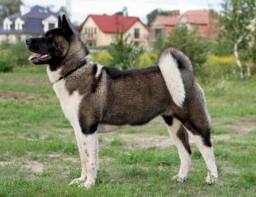
The reality remains however, that despite the fact that we are talking about peoples pets, our “best friends”, and constant companions, animals that they love dearly, pets that are regarded as part of the family, that we experience aggression, biting, nipping and dominant behavior continuously from our dogs.  As a veterinarian it is of great concern to me that so many of our dogs can not be controlled by their owners.  That so many dogs are out of control and undisciplined, regardless of their size or breed.  One need only tune into an episode of “Caesar Milan’s Dog Whisperer” on TV to see how dogs are ruling the behavior of their people, rather than the other way around.

The statistics of dog attacks show without exception that dogs that have been trained and are obedient have a statistically hugely lower incidence of attacks on people.  This includes all breeds both large and small.  In the UK Labradors have been one of the top listed breeds of dogs involved in attacks.  Here in the US and Canada, German Shepherds were for a long time on top of the list but have now been replaced by the power breeds of Pit Bulls, Cane Corso’s and here we have a case of Akitas.  The big difference with the power breeds of course is that they do more harm than the smaller breeds.

As a society we can do well to remember that the happiest dogs are those to which we assign jobs and work and from which we demand respect of our rules.  No matter what the breed, all of our dogs have been bred to work and we need to not only allow them, but to teach them how to do this.  All dogs should know how to sit on command.  Also how to heel, lie down, stay, come and walk on a leash without pulling.  No dogs should jump up on us without being invited to do so, or jump onto the furniture without invitation.  Food should not be available all day, but should be given twice daily with the requirement that the dog sits obediently and only take the food on command.  Praise and reward should be earned, and not unconditional.  And the best “love” that you can give your dog is to give it adequate exercise and attention.  If you need help in how to do this just tune in to an episode of “The Dog Whisperer” and if necessary enroll in training classes, which are available all over, and conveniently for us with the Calgary Humane Society.  If you want to see a happy dog just attend a show of “Super Dogs” or go to any dog agility trial.  All of this is available in Calgary.  Empower your pet to attain it’s true potential with your help.  That is what loving your pet is really about!


PS:  After jotting down the above I requested feedback from three dog trainers with whom I work closely.
The following are their replies.


Janine:

I think there is a problem with the power breeds and biting it is quite inflammatory (and yes, they certainly happen but get spectacular press).  This gives people the impression that their biting Dachshund or Cocker Spaniel isn't an issue as hospitalizations don't happen as often.  A far bigger problem I feel is dogs in the home biting - usually the small breeds and although these don't make the headlines, yet they create an environment of owner terror and helplessness where the dogs rule the household.  


Dave:

Well done Mark!  I agree with your position and feel you have expressed it well.  The Akita is breed that was bred to guard and this is an important fact that may help people understand why the dog might react in a certain way, even without the presence of new puppies, which as you mentioned would certainly escalate the situation.  Often people tend to misread, or not pay attention, to what a dog is telling us through its body language.

It seems you are putting the responsibility on the owner and not the dogs, with which I agree with as well.   It seems as though the dogs and those unfortunate people were placed in a horrible position by the owner.  The situation was not the same as it was before the pups had arrived and they should have all thought about that before having the dogs with their puppies in the “passage way” to get into their home.  Especially as you mentioned with another dog being present.  So why should these dogs even be considered for being put down when they reacted with a normal animal behavior to protect their pack?  The owner should be the one to suffer the cost to ensure the humans safely heal mentally and physically and the cost to rehabilitate the Akita's and place them in a proper environment with a human who knows how to handle a “power breed”.

I worked with an Akita who was on guard all the time and it only took 3 minutes for me to remove that with her.  It took the owners a few months but they are now with a dog that has not attacked in over 8 months and has dog friends.  Before the dog had attacked 3 dogs in 4 months.  The dogs can be trained most of the time to be under control, but the owners have to want that for their pet, and to put in the required effort in.


Gail:

Great points Mark.  I think that you've covered most of the basic issues with this horrible and tragic attack, especially in regards to why the Akitas were motivated to attack.

I'm a big believer in leadership as you know, and to me that is the foundation of proper and healthy dog ownership. I think that pet owners are often conflicted by this need to provide leadership and direction and for the usual reasons of needing the dog to meet their needs, be that as substitute children, security or friendship. I have often told my clients that they don't respect their dogs if they are unable or unwilling to treat their dogs as dogs and not as people.

I support your views of training and jobs one hundred percent. I would like to stress over and over, that dogs are dogs, and that they communicate with body language and voice tone. They have strong instinct, and that is what motivates their behavior. Therefore, in order to be good and responsible dog owners, we must learn to view life from the perspective of the dog and not dump our human thoughts and emotions on them. We've put them in a situation where for the most part, they are dependent on us to survive. Therefore, we need to provide them with their needs, not ours.

Wednesday, July 27, 2011

Marijuana Toxicity


I came across this very interesting article in the "Veterinary Practise News" Journal and reproduce it here in it's entirety.  I found it to be informative, comprehensive and in line with my experience with these cases which have been handled in a similar manner, usually while working at after hours emergency clinics.  
Dr Mark Rubensohn


Treating Marijuana Toxicity
Posted: June 23, 2011, 3 p.m., EDT

By Patrick Mahaney, VMD
For Veterinary Practice News

When veterinarians think of regionally specific illness, toxicity caused by consumption of native plants and exposure to infectious organisms typically comes to mind.

In preparation for a move to Southern California, I studied the effects of sago palm ingestion and inhalation of Coccidioidomycosis with the anticipation of the conditions I would be diagnosing and treating in my clinical practice.

I did not anticipate that I would end up treating such a large number of dogs presenting with clinical signs consistent with marijuana (cannabis sativa) consumption. As the sale of medical marijuana is legal in many California cities, dispensaries provide human patients with smokable or edible products.

Unfortunately, humans can carelessly leave these products in locations accessible to their curious pets, leading to ingestion.

Clinical Signs

Although a pet could show signs of marijuana toxicity post-inhalation, the majority of cases I see are due to suspected or known oral ingestion. I have treated dogs almost exclusively, yet cats can be similarly affected. A 2002 study of 250 cases of marijuana exposure showed dogs to be the primary cannabis consumption culprits (96 percent). Cats followed in a distant second place (3 percent), and other species made up the smallest portion (1 percent).1

Mild cases present with lethargy, altered response to visual or verbal stimuli, injected (blood engorged) conjunctiva and behavior changes.

More severe cases display ataxia, hypothermia, hypotension, bradycardia, ptyalism, emesis, anorexia, urinary incontinence, diarrhea and dysphoria (vocalization). Coma and death are also possible in severe cases.

Clinical signs can occur within minutes to hours and can last for hours to days, in part due body fat storage of the active ingredients in marijuana.

A 2004 study of 213 dogs with oral marijuana exposure showed neurologic signs (lethargy, ataxia, dilated pupils, etc.) in 99 percent of patients. Gastrointestinal signs, such as vomiting, were seen in 30 percent of patients.2

Although marijuana can have an anti-nausea effect, the volume consumed in proportion to the patient’s body weight, other ingested ingredients, and the induced release of “feel-good” hormones like serotonin, can cause vomiting.

In a video available at VeterinaryPracticeNews.com/MarijuanaToxicity, an Italian greyhound that ingested marijuana overreacts to visual and audible cues, appears to have difficulty standing and walking, and ultimately ends up lowering itself to a sternal position on the ground in a staggered fashion.

Mechanism of Action

Marijuana contains delta-9-tetrahydrocannabinol (THC), which causes the release of the neurotransmitters acetylcholine, dopamine, norepinephrine and serotonin in the brain’s frontal cortex and cerebellum. The increased release of these neurotransmitters leads to the various clinical manifestations.

As the attending veterinarian, I consider the possibility of other factors contributing to the overall picture of health or illness. Did the pet consume only cannabis? Could prescription or over-the-counter human or veterinary medications, other recreational drugs or unknown intoxicating substances be involved?

Differential Diagnoses

Cannabis toxicity has a variety of differential diagnoses. Options include stimulants (ephedrine and ephedrine-like compounds, amphetamines, nicotine and methylxanthines found in chocolate), opioids, benzodiazepines, antidepressants, amitraz (such as that used in anti-parasitic collars), ivermectin (from heartworm preventives), bromethalin (rodenticides), ethylene glycol (antifreeze), and alcohol (ethanol from rotting fruit, bread dough, etc.).
The majority of cases I have treated presented with multiple clinical signs, leading to the top differential diagnosis of cannabis consumption. The diagnosis, however, may not necessarily be confirmed by the owner, who may be completely unaware that a pet was exposed to the drug.

Others are up front about their pets’ ingestion of cannabis. Most are somewhat reluctant to share the truth, but ultimately concede under gentle, direct questioning.

I always ask questions in a manner conveying my intention to help the pet and its treatment. In doing so, I create an environment where the owner can tell the truth, a realistic diagnosis can be achieved and I can expeditiously start the diagnostic and treatment process.
Besides the effects of THC, “edibles” can contain substances potentially adversely affecting a pet’s health. These include carbohydrates, fat, proteins, and other ingredients. Vomiting, diarrhea, anorexia, pancreatitis and other clinical signs can ensue and lead to further complications. The Italian greyhound in the video that ate the chocolate-, sugar- and butter-filled marijuana brownie created a rather unfavorable situation for itself after inquisitively snatching the goodie from the owner’s bag.

Treatment

Having treated innumerable cannabis toxicities, I feel comfortable that my patients will make a full recovery with the appropriate care. If other toxins are suspected or known, I start a case file with the National Animal Poison Control Center (use weblink aspca.org/pet-care/poi
son-control/).

I perform baseline blood diagnostics to evaluate organ function. Knowing the status of the liver, kidneys and other body systems helps to rule out other underlying metabolic derangement that could contribute to the presenting clinical signs. I also recommend abdominal radiographs to look for gastrointestinal foreign bodies or other abnormalities.
For exposures occurring less than two hours before presentation, emesis is induced to clear the stomach of the intoxicant.

Once vomiting is under control, administration of activated charcoal can reduce absorption of certain toxins and speeds their evacuation through the gastrointestinal tract.

Provided a pet is not vomiting or comatose, administration of activated charcoal is a component to treating many cases of toxic exposure because of its ability to reduce enterohepatic recirculation of a toxic substance. Enterohepatic recirculation occurs after a toxin enters the bloodstream through the digestive tract, gets processed by the liver, then is excreted back into the small intestine via bile from the gall bladder.

Patients showing more profound sedation, ataxia, hypothermia, vomiting or other clinical signs are hospitalized for supportive care. Intravenous fluids, thermoregulatory support and anti-nausea and antacid medications promote a more rapid recovery and positive outcome.
Marijuana toxicity patients are typically discharged upon resolution of clinical signs and once they can hold down water and food.

Prevention is Best

The best way to avoid illness secondary to toxic exposure to any substance, including marijuana, is through prevention. Owners must pet-proof their homes with the same effort and attention to detail as they would baby proof for a human child.

Pets are intrigued by all sorts of smells, sounds and appearances, often curiously using their nasal and oral openings to evaluate anything within  reach.

Clients can help prevent a pet’s toxic exposure by not bringing specific substances into the home or at least storing foods, medications and other household products where the animals can’t get them.

Dr. Mahaney is a Southern California veterinarian offering integrative veterinary medicine on a house call and in-facility basis through his business, California Pet Acupuncture and Wellness (CPAW) Inc., including acupuncture, Chinese herbs, nutritional and environmental modification and emergency medicine.

FOOTNOTES

1. Janczyk P, Donaldson CW, Gualtney S: Two hundred and thirteen cases of marijuana toxicoses in dogs. Vet Hum Toxicol 2004 Vol 46 (1) pp. 19-21.
1. Shell, L: Marijuana Poisoning. Veterinary Information Network, 2006.

Saturday, June 4, 2011

Chicken Jerky Treats

IMPORTANT ALERT !!!!!! Chicken Jerky Treats manufactured in China have been implicated in causing disease in dogs in Ontario. Signs include decreased activity, vomiting and increased drinking and urinating. Blood tests may show increased kidney enzymes and increased blood glucose levels. Therefore at this stage we are recommending that all jerky type treats that come from stores be stopped till further information is available.

Monday, May 23, 2011

Fluoridation of Drinking Water


It over the past 50 years one of the greatest public health advances and medical improvements that have been made in out society is the fluoridation of public drinking water. It has been a major factor responsible for the decline in tooth decay. Although other fluoride containing products are available, addition of fluoride to drinking water has proven to be the most cost-effective and efficient method of providing fluoride to all members within the community regardless of age, education, or level of income. The safety, efficiency and effectiveness of adding fluoride to water has been extensively and scientifically studied across numerous continents encompassing hundreds of cities and millions of people.

It has been shown that a community can expect to save $40 for every $1 invested to fluoridation of its public drinking water. In the review of numerous studies on the rate of tooth decay, it has been shown to be valuable not only for children but also for adults, with each new age group of older adults retaining more natural teeth than the generations before them. Safety has not been in question with the exception of abuse, generally in children who are swallowing toothpaste or over ingesting fluoride containing supplements, both generally occurring due to poor parental supervision. Dental staining or spotting has been reported where mild excess of fluoride has been ingested over time, with no damage to either the teeth or the subject.

Guidelines to the addition of fluoride have changed over the past 10 years due to the universal addition of fluoride to toothpastes. This has resulted in the increased exposure of individuals to fluoride. Thus Calgary City and Alberta Health Services as part of their ongoing review of the water fluoridation program reduced the level of fluoride to 0.7 mg/L (from the previous 1 mg/L) in 1998. (Fluoride naturally occurs in the Bow and Elbow Rivers, in concentrations varying throughout the year, between 0.1 and 0.4 mg/L).

As of  May 2011, Calgary city Council has voted to remove the fluoridation of the city’s water due to pressure of self interest groups and against advice and recommendations of the region's chief medical officer of health, of Alberta health region, and they opted not to consult with the expert panel that was offered by the University of Calgary for free. Interestingly Major Nenshi was absent during this critical Council vote which impacts the health of all Calgarian's. Reasons for the vote to stop fluoridation included the cost to the city of $750,000 a year for implementation, plus additional costs to upgrade the fluoridation equipment. Other factors claimed included the rights of counsel to impose addition of fluoride to drinking water which might not be approved by 100% of the population.

References:
  1. City of Calgary  “Fluoride discontinued in Calgary’s drinking water”
  2. Community Water Fluoridation and Dental Health in the U.S

Recommended Sources for further information:
  1. http://en.wikipedia.org/wiki/Water_fluoridationhttp://www.cdc.gov/fluoridation/index.htm


Thursday, May 5, 2011

Free Nature Walks | Birds Calgary

Free Nature Walks | Birds Calgary: "Sun May 8, 8am: Visit Frank Lake to look at the birds – and the insects that support them! Learn the reason for the varied birdlife – and the diverse aquatic invertebrates that the lake supports. Meet Anderson LRT Station, Macleod Tr., S of pedestrian overpass, or at 8:45am, at the gate to Frank Lake, S off Hwy 23, about 5 km E of High River. Bring lunch. Leaders, aquatic specialist, Danita Mazlankowski, 403-771-2461 and Greg Wagner, 403-601-3893."

Tuesday, May 3, 2011

Urine Grass Burn


At this time of the year our grass is most susceptible to urine burn from our dogs.  Also, unfortunately the bluegrass that is our most common lawn grass, is also the most susceptible to urine burn.  The cause is the high nitrogen concentration of urine, due to it’s the ammonium content.  Just as over fertilization will kill the grass, so does the urine.  The only real cure is to liberally water the lawn where your pet is urinating.  Once we get into the wetter and warmer time of the year, and we actually get into the growth phase of the grass, this is no longer such a problem.  During the snow covered winter months the urine is often sufficiently diluted by the snow cover and so causes less damage.  So if you are concerned about the spots of killed lawn, now is the time to start watering where your dog urinates. 
Females dogs are more damaging to the lawn as they squat and localize their urine.  Male dogs often urinate up against objects and so are urinating into the flower beds or have a disseminated stream.

For the most part many of the products that are recommended to prevent grass burn which are sold for dogs are poorly effective or potentially harmful.  After many years of experience with a variety of products, we have yet to find anything that works any better than water, re-seeding and time. 

Friday, April 29, 2011

Raw Food Diets


We at Bridlewood Veterinary Clinic have used home prepared and raw food diets for many years (Dr Mark has fed his own and clients pets for over 20 years) with the greatest success.  We have found our pets to not only love this diet, but to gain many benefits.  It can be used for both weight loss and gain with good results.  The pet’s coats are always shinier and softer, they display increased energy, this food is good for allergies, dogs at risk for gastric torsion, and stool volume is hugely decreased.  Dental condition improves, especially where raw bones are used as part of the protocol.
In the past we have fed Mountain Dog Food which is mainly a chicken based diet.  Currently we are using Farm Fresh Pet Foods which comes as either cooked or raw preparations.  It is also available as a beef base with oatmeal which is our preference.  However for dogs that have allergies there is a Bison and Berry formulation and there is also a grain free beef formulation, where this is a requirement.